Board of Complementary and Alternative Medicines-BCAM Start your own admission or New Center Contact at: 09359922777, 9219511185 अपना प्राक्रतिक चिकित्सा एवं योग का तथा कॉम्प्लीमेंट्री एवं अल्टरनेटिव पैथी का शिक्षण / प्रशिक्षण केंद्र शुरू कर निस्वार्थ राष्ट्र सेवा करने के लिये सम्पर्क करें To Become our Global Academic Partner or for any Related Queries. You may Contact at....9359922777

जानिए, पानी पीने का अच्छा और खराब समय काैेन सा है…………..

untitled-3_1447747163

कहा जाता है स्वस्थ शरीर के लिए एक दिन में कम से कम 8 से 10 गिलास पानी जरूर पीना चाहिए। जो लोग पानी कम पीते हैं उन्हें कई तरह की बीमारियां हो सकती है। इसलिए ध्यान रखें कि आपका आधा पेट भोजन से एक चौथाई भाग पानी से और शेष 25 फीसदी भाग हवा से भरा होना चाहिए। पानी हमारे जीवन और सही स्वास्थ्य के लिए जरूरी है। इसलिए पानी पीते समय यदि कुछ बातों को ध्यान रखें तो बीमारियां आपसे दूर ही रहेंगी।

1. सुबह उठते ही पिएं 1 से 2 गिलास पानी

सुबह उठते ही 1 से 2 गिलास पानी पिएं। इससे शरीर से सारी गंदगी बाहर निकल जाती है। त्वचा ओर पेट दोनों ही स्वस्थ बने रहते हैं।

2. खाना खाने के आधे घंटे पहले पिएं 1 गिलास पानी

खाना खाने से पहले यदि आप पानी पिएंगे तो आप भूख से कम खाएंगे। जिससे मोटापा नहीं बढ़ेगा और साथ ही आपकी आंते भी ठीक से काम करेंगी।

3. खाना खाने के तुरंत बाद या पहले पानी ना पिएं

untitled-4_1447747269

खाना खाने के एक घंटे बाद ही पानी पिएं, क्याेंकि उससे पहले पानी पीने पर पेट में खाना पचाने वाला जूस अपना प्रभाव नहीं दिखा पता और पाचन संबंधित दिक्कते हाे जाती हैं। यदि आप खाना खाने के तुरंत पहले या बाद में पानी पिएंगे तो खाना जल्‍दी हजम नहीं होगा।

 4. पानी की जगह दही, छाछ या रायता आदि का सेवन करें

अगर आप को खाना खाते वक्‍त प्यास  लगे तो पानी की जगह दही या रायता लें। इससे आपके शरीर को ठंडक मिलेगी और खाना भी आराम से हजम होगा।

 5. भूख लगने पर पानी पिएं

यदि भूख लगे तो सबसे पहले पानी पिएं और फिर 10 मिनट का इंतजार करें। फिर भी अगर भूख ना मिटे तो कुछ खाएं। ऐसा करने से आप बेकार का स्‍नैक खाने से बचेंगे।

6. थकान लगने पर पानी पिएं

हमारा दिमाग 75% पानी से भरा हुआ है। अगर आप थकान लगने पर पानी पिएंगे तो आपका दिमाग अच्‍छे से काम करेगा और आपका मन काम में भी पूरी तरह लगेगा।

7. दिन के शुरुआत में ढेर सारा पानी पिएं

दिनभर ढेर सारा पानी पीना चाहिए और जैसे जैसे शाम होने लगे, पानी का सेवन कम कर देना चाहिए, जिससे रातभर बाथरूम की ओर ना भागना पडे़।

 8. नहाने से पहले पानी पिएं

untitled-5_1447747641

नहाने से पहले पानी पीने से ब्‍लड प्रेशर कम करने में सहायता मिलती है। यदि गर्म पानी का शॉवर ले रहे हों तो नहाने से पहले ठंडा पानी पीने से बचें।

9. एक्‍सरसाइज के पहले और आखिर में पानी पिएं

untitled-6_1447747772

यह बहुत जरूरी है कि जब भी आप एक्‍सरसाइज करें तो उससे पहले पानी पी लें, जिससे आपकी मांसपेशियों को एनर्जी मिल सके। पानी पीने से थकान कम लगती है। यदि आप पानी नहीं पिएंगे तो आप जल्‍द ही थक जाएंगे।

 10. बीमारी, प्रेगनेंसी या स्‍तनपान करते वक्‍त पानी पिएं

यदि आप बीमार है तो पानी पीने से आपकी बॉडी जल्‍द ही रिपेयर हो जाएगी। प्रेगनेंट और स्‍तनपान करवाने वाली महिलाओं को आम दिनों के मुकाबले अधिक पानी की आवश्‍यकता होती है। इन्‍हें हर दिन 10 गिलास पानी पीने की सलाह दी जाती है।

11. खड़े होकर न पिएं पानी

मान्यता है कि खड़े होकर पानी पीने से एक उम्र के बाद घुटनाें का दर्द परेशान करने लगता है। इसलिए ऐसे पानी पीने से बचना चाहिए।

12. बाहर के पानी से बचें

बाहर का पानी पीने से यथा संभव बचें। अशुद्ध पानी से लीवर और गुर्दों के रोग हो सकते हैं।इन दोनों में इंफेक्शन हुआ तो इसका असर दिल पर भी पड़ता है।

Benefits of Yoga


          Prime among yoga’s many health benefits is its proven ability to help reduce stress. Experts maintain that up to 80 percent of all illness is caused by stress. The activities and stimuli of contemporary life are constantly triggering what scientists refer to as “the fight or light” mechanism. This expression refers to the way in which we respond to stress. This response is involuntary, and includes an elevation in heart rate, blood pressure, and the creation of toxic chemicals in the body. Yoga helps to induce the opposite effects, in what Herbert Benson, M.D., termed “the relaxation response” in his groundbreaking book of the same title. Yoga can help to reduce blood pressure, heart rate, and improve circulation to help remove toxic wastes from the body.

            This may in turn help boost the functioning of the immune system. Yoga is so effective at inducing the relaxation response that many prominent authorities recommend its use for reducing stress and promoting health, including Dean Ornish, M.D., and Jon Kabat-Zinn, Ph.D. Indeed, much to the astonishment of Western scientists, accomplished yogis have demonstrated that they can exert conscious control of heart rate, blood pressure, and even the circulation of the blood.


          In addition to its ability to help reduce stress, yoga has many other benefits for a man’s health. One of the primary aims of the physical practices of yoga is to help improve the alignment and flexibility of the spine. This is encouraging news for the 70 million Americans who are estimated to seek help for back problems each year. Yoga can help promote overall fitness by both stretching and toning virtually all the muscles in the body.

        Yoga exercises can help increase range of motion in joints and help protect muscles from being injured during sports and athletic activities. They can also help to lengthen and restore muscles after exercise. Yoga postures can help improve circulation and eliminate toxic waste substances from the body. They can help promote optimum functioning of the internal organs by helping to massage and tone them. Yoga postures can help open the area of the pelvis and organs of reproduction that are housed there. Yoga practices can help bring increased circulation, muscular control, and awareness to a man’s sexual region, thus promoting enhanced sexual enjoyment.

         The breathing practices of yoga can help improve lung capacity and posture, and harmonize body and mind. The meditation practices of yoga can help still the mind and bring about greater inner clarity, peace of mind, and self-understanding and acceptance. This can help lead to greater emotional awareness and stability. For those men seeking spiritual enlightenment, yoga has a variety of techniques that can help support and guide you on your path. Yoga can form a cornerstone of your ongoing health maintenance program. As more and more men are discovering, it is increasingly important for them to take charge of their own physical fitness and healthcare. The physical postures of yoga can offer a refreshing alternative to high-impact cardiovascular and strenuous bodybuilding practices, an especially attractive option for a population that is increasingly aging.

         Yoga also offers a man the opportunity to become much more aware of his own body. Through the mindfulness and awareness that yoga engenders, a man has the opportunity of listening more carefully to his body so that he might detect pain, discomfort, and other warning signs early enough to take preventative action before illness or disease sets in. In addition to its overall health benefits, yoga can be of special value to men, in particular, by helping them to contact their inner resources. As many top yoga teachers underscore, today’s man is often caught up in the pressures of work and conforming to society’s perceived expectations. This can result in a man’s armoring himself and losing touch with his inner self. Yoga practice can provide a man with the opportunity to reconnect with himself and to accept himself just as he is—not as he feels he is “supposed” to be. Through a sustained yoga practice, a man can experience the priceless benefits of peace and happiness that can accompany self-awareness and self-acceptance.


A Brief Overview of the History of Yoga


          The exact date and circumstances of the origin of yoga are unknown. This is because the practice of yoga is so ancient that it is believed to predate the written texts and visual images that depict it. Most scholars trace the origins of yoga to at least 5,000 years ago. Yoga is believed to have originated through the insights and experiments of ancient seekers of wisdom, mystics, and visionaries on the Indian subcontinent.             

         Through intense inner searching, they developed practices that were passed down orally and eventually recorded in a body of text that is considered sacred in the Hindu and other spiritual traditions. The earliest known writings on yoga are contained in the Vedas (Sanskrit for “knowledges”), the most ancient extant Hindu texts. The oldest of these, the Rig-Veda (“Knowledge of Praise”), believed by some scholars to date as far back as 3000 B.C..,contains plentiful references to yoga.2 Other ancient sacred Hindu writings, including the Upanishads (“to sit down close to one’s teacher”), helped to codify the oral tradition that formed the basis of yoga. Some of the earliest and most influential writings on yoga are the Bhagavad Gita and the Yoga Sutras of Patanjali. The Bhagavad Gita (“Lord’s Song”), which forms a part of the epic Mahabharata (“Great Story of the Bharatas”), is believed to have beecomposed between the third and fifth centuries B.C.E. Consisting of approximately 700 stanzas, the Bhagavad Gita contains crucial instruction by the Hindu god Krishna to the warrior Arjuna on the principles of yoga.

           The precepts he presents continue to guide the practice of yoga today. The Yoga Sutras (sutra means “thread” in Sanskrit and is related to the English word suture) is a series of terse aphorisms or maxims that distill the essence of yoga thought. These aphorisms total 195 or 196, depending upon the source text. The Yoga Sutras are ascribed to the yoga authority Patanjali, who is believed to have lived between the second and the fifth century C.E. Patanjali is often called the “father of yoga,” although his real contribution was to codify existing knowledge of yoga and help provide it a place within classical Hindu philosophy. One of the most seminal and well-known texts on hatha yoga is the Hatha Yoga Pradipika (“Light on the Forceful Yoga” in Sanskrit), written in the 14th century C.E. by Svatmarama Yogin. This text is considered by some scholars to be the most influential text on hatha yoga, the branch of yoga that deals most specifically with the physical discipline of yoga.

          Yoga is much more than an archaic codification of information, however. It is a living system of knowledge. Since its inception millennia ago, yoga has continued to grow and evolve. From its origins in prehistoric India, it has been embraced by many systems of thought, including Buddhism, and has become an integral part of the cultures of a number of other countries, including Tibet, Pakistan, and many other Asian civilizations.


Other  Major Branches of Yoga


There are many paths to choose from, and all the paths are equally valid.2 —Swami Rama While most authorities on yoga generally agree that bhakti, jnana, karma, and raja are the four major branches of yoga, there are several yoga practices, or traditional approaches to yoga, that have gained prominence, and which might be considered offshoots of the major branches of yoga. You may, or may have already, come across the names of some of these offshoots. Being familiar with the following popular terms will help round out your understanding of yoga.


Tantra Yoga


Tantra means “loom” in Sanskrit. Tantric yoga uses a variety of practices such as external rituals celebrating the divine feminine principle as well as more internal practices such as meditation and mantra recitation to weave the way to enlightenment. Many scholars believe that the practices of tantra are very ancient. According to some, tantra developed as a reaction to classical yoga practices, which traditionally had been reserved exclusively for certain castes of practitioners, especially men. Tantra is particularly appealing to men who enjoy communing with others. Rather than withdrawing into himself alone, a man can engage with others in order to achieve liberation. This union can entail sexual union. As a result of this fact, tantric yoga is sometimes mistakenly understood to apply only to sexual practices. Tantra, however, involves a much wider range of rituals that are practiced in a sacred, ceremonial way to imbue them with the power of transformation and self-realization. When tantric practices include sexual acts, these acts are engaged in as a means of achieving self-realization. Kundalini yoga draws on some of the practices that form part of tantra yoga.


Iyengar Yoga

      Iyengar Yoga is an approach to yoga developed by Bellur Kirshnamachar Sundararaja Iyengar, known more commonly as B.K.S. Iyengar (1918–). It aims to integrate body, mind, and soul. Iyengar Yoga is known for the dynamic precision that its practitioners exemplify in their execution of the physical asanas. It is a complete system of yoga that aims to liberate the soul by integrating the mind and the body through the practice of asanas. In Iyengar Yoga, asana practice becomes meditation in motion, and yoga itself becomes “the perfect art in action.”

Hatha Yoga


              Hatha literally means “violence” or “force” in Sanskrit. Hatha yoga is frequently referred to as the “forceful yoga.” It generally refers to the practice of the physical postures, or asanas, of yoga. To many people, yoga is synonymous with the practice of these physical  postures. A variety of approaches to executing these postures has developed over time; consequently, various approaches to hatha yoga have developed. The following chapters will help you better understand the most important approaches to hatha yoga.

                    Hatha yoga means literally the “forceful yoga.” As its name implies, this approach to yoga emphasizes the vitality and life force of the physical body. Hatha yoga is undoubtedly the most well known, popular, and frequently practiced style of yoga in the West. It places great emphasis on purifying the body through a variety of means that include physical exercise, cleansing rites, and specific breathing techniques. These practices not only strengthen the body through the force of exercise, they can also help you to expand your own personal force, or store of energy, through their vitalizing effects. One of the most influential and widely read texts on hatha yoga is the Hatha Yoga Pradipika, written in the 14th century C.E.

                In this seminal manual, the author describes 16 physical postures as well as a variety of cleansing and breathing practices and what are known as locks and seals to control the flow of energy within the body.1 In its emphasis on physical postures, or asanas, hatha yoga is often considered one of the steps on the eight-limbed path of yoga, which forms an important part of classical, or raja, yoga. However, it is important to bear in mind that emphasis is placed on making the body as whole and complete as possible in order to achieve the ultimate goal of liberation. Practitioners of hatha yoga believe that in order to achieve the fullest unfoldment of our minds and spirits, we must do our utmost to have a body that is at ease and free of disease. Hatha yoga is thus a way of balancing or harmonizing body and mind. This intent is highlighted in the esoteric interpretation sometimes accorded to the word hatha. According to some practitioners, the word hatha is comprised of two syllables that stand for the sun (ha) and the moon (tha), implying a deep union of the body and the mind and of the mmasculine and feminine energies within each individual—man and woman alike.

         Thus, the word hatha reminds us that at heart, yoga is a search for underlying unity and wholeness. Hatha yoga practitioners see the body as a wonderful vehicle for self-realization. For without a body, we would not be alive today, and thus incapable of seeking the path of transformation. Hatha yoga urges a man to respect his body as a temple of the divine spirit of the universe. The practice of hatha yoga is thus an opportunity of honoring your own inner divinity. Hatha yoga has become so popular, particularly in the last few decades, that there are now many styles for practicing it. Surprisingly, however, most of the styles of hatha yoga that are practiced today trace their roots to a handful of yoga teachers, who traveled from India to the West in the 1960s and 1970s to train practitioners here in their particular approach to yoga; or to a small number of Westerners who traveled to India during the same time period to train as teachers with a few celebrated masters. The teachers of the 60s and 70s differed in their approach to presenting yoga from the gurus who had preceded them. The earliest teachers of yoga who traveled to the West in the late 19th and early 20th centuries emphasized the traditional sacred texts and metaphysical aspects of yoga. The newer generation of teachers, while revering all aspects of the yoga tradition, also incorporated much more of the physical exercise aspect of yoga into their teaching. Their approaches to yoga appealed to Western practitioners, and, consequently, much of the yoga that has developed in the United States has focused on the physical postures of hatha yoga. The following chapters will introduce you to the main approaches to hatha yoga that have helped to define hatha practice in the West. Because there are now so many styles of yoga available, the choice of a practice can seem overwhelming. These chapters will introduce you to the main styles of hatha yoga so that you can be better informed as you undertake your own practice of yoga.

                      Each of the main styles of hatha yoga is generally named after the individual who first introduced or was influential in the teachings of that style, such as Iyengar Yoga and Sivananda Yoga; the institute that was founded based on their teachings, such as yoga taught at the Himalayan Institute and Integral Yoga; or for a prominent element or focal point of the approach, such as Ashtanga Yoga and kundalini yoga. Nearly all the various styles of hatha yoga have as their base a common repertoire of physical postures and practices, which have evolved over the centuries.

          The emphasis on how to perform these practices can differ widely from one style of yoga to another, however. Understanding the differences among these styles can help you choose the style of hatha yoga that is right for you. The following chapters describe the major styles of hatha yoga that you are likely to encounter in your exploration of yoga today. As you read these chapters, please bear in mind that the approaches to yoga presented are grouped together under hatha yoga for convenience. In addition to instruction in the physical postures of yoga, most of these approaches can also help you incorporate a full range of yogic practices into your life.


ASTANGA ATURVEDA (eight branches of Ayurveda)


salyam, salakyam, kaya cikitsa, bhutha vidya, kaumara brityam, agathatantram, rasayana tantram, vajeekarana tantram- are the eight branches (of Ayurveda) in which treatment (of diseases) is embodied (described)


Notes --Kaya cikitsa branch deals with the treatment of diseases arising due to improper digestive activity, known in modern  as Inner Medicine;

          Bãla cikitsã is treatment of diseases of children (pediatrics), Graha cikitsã means treatment of diseases arising from possession by evil spit its, pathogenic micro organisms etc. and deals mainly with mental diseases (psychiatry). Salakya deals with treatment of areas of the head inclusive of the eyes (ophthalmology ), ears (otology), nose ( rhinology), throat ( laryngology) and teeth ( dentistry).
         Salya cikitsã also known as Jastra cikitsa deals with treatment of requiring the use of knife (surgery).

Agatha tantram / Damstra. cikitsã is treatment of diseases due to poison (toxicology).

         Rasayana chikitsa deals with treatment of diseases of old age (gerontology, geriatrics).

         Vajikarana cikitsa deals with treatment of diseases like impotence, sterility etc. and making man sexually strong by the use aphrodisiacs (verification).
           From those treatises which are very elaborate (hence difficult to study ), only the essence has been collected and this treatise—Astânga hrdaya—prepared which is niether too succinct nor too elaborate.


About Ayurveda


Content

History

Why Ayurveda Originated ?

Eight Branches In Ayurveda

Basic Principles of Ayurveda

Tridosha

Pancha Maha-bootha concept

Ayurvedic Approach to Health and Wellness

About Ayurveda Treatments (Upakrama)

Panchakarma

Ayurvedic Text Books- Tantra

Types Of Medicine In Ayurveda


                   The word Ayurveda is a Sanskrit word (आयुर्वेद) that evolves from combination of two words, "Ayush" (आयुस्) meaning life and "veda" (वेदः) meaning knowledge. Ayurveda means "Knowledge about Life" Ayurveda is a 3000 year old science that originated in India. Present region of North Indian, Pakistan, Nepal, Barma, Tibet and East-Northern places of Bangladesh. The components and concept of Ayurveda is rooted in Vedas. Ayurveda considered as the one of the Upveda of ‘Adharva veda’.

  History

                           Ayurveda is an ancient medical science which was developed in India thousands of years ago. Believed to have been passed on to humans from the Gods themselves.God ‘Dhwanathiri’ considered as the god who gives ayurveda to mankind for his health. In ayurveda literature it says that ayurveda not created, it sates ‘BRAMHA SMRITHWA AYURVEDA ‘. ie God Brahma recollected or compiled ayurveda science. It is believed that early a samhita named ‘Bramha Samhita’ was present. All other samhita’s used content Bramha samhita to write new samhita for easy understanding and usage.


         Ayurvedic Medicine is the world's oldest comprehensive health care system and is indigenous to India where it is widely practiced. "This ancient art of healing asserts that the science, philosophy and spirituality are all necessary aspects of healthy living." Thus Ayurveda is not only a comprehensive medical system but also a way of living and the very concept of "mind, body and spirit" originates from Ayurveda.

              Ayurveda originated in vedic time, ancient universities like was ‘Nalantha’ and ‘Takshashila’ was the main hub off education in ‘Hindustan’. They promoted ayurveda. Due to ‘Buddhism’ and ‘Jainism’  ayurveda spred all over the world, ‘Buddhist’  saints spread the ayurveda to South India, Srilanka, Indonesia etc. But I want to mention one thing that due to principle in ‘Ahimsa’ in ‘Buddhism’, surgical information in the Ayurveda almost lost they give more impotents to herbal and treatment procedure. Still we can see the influence of Buddhism in ayurveda classical text book.

 Why Ayurveda Originated ?

                In vedic time people are preferred ‘yaga’ or ‘Homa’ for a purpose like to get blessing from god, nature etc. To get cure from a disease, ‘Yaga’ is prescribed. Sir, you can simply guess what will be the cost  for a ‘yaga’ like procedure, naturally that will not affordable by people, many families became poor due to this. Also more important thing is there, in ancient time ‘Chatur Varnya’ based community life style is adapted. All are not rich to involve in Yaga and all are not allowed. This situation lead a necessary situation to design a treatment protocol like ayurveda which is effective also cost effective system, even ordinary people can use.

             Our ‘Acharya’ are considered as ‘Apta’, which simply means they free from all the negative energy from the earth, no intention to cheat others, not want to get any profit from anyone. They saw all the people as one, not based on community system. I believe that due to this Ayurveda is still exists, due to their kindness and truthfulness in heart, not me and any of other ayurveda doctors.

 Eight Branches In Ayurveda

   The Branches in Ayurveda are derived from classical Sanskrit literature, in which Ayurveda was called "the science of eight branches" (Sanskritaṣṭāṅga अष्टांग). The components are:

 1.Kayachikitsa (general medicine): "cure of diseases affecting the body".

 2.Kaumāra-bhṛtya and Bala Roga: deals with the treatment of children.

 3.Shalya tantra deals with surgical techniques.

 4.Śālākya-tantra - deals with diseases of the teeth, eye, nose, ear etc.

 5.Bhuta-vidya deals with the causes, which are not directly visible and not directly  explained by tridosha ,pertaining to micro-organisms or spirits.

 6.Agada-tantra deals with antidotes to poison.

 7.Rasayana-tantra (Geriatrics)/(Anti Agings) : deals with rejuvenation.

 8.Vajikarana tantra (aphrodisiacs) deals with healthy and desired progeny.


 Basic Principles of Ayurveda


Tridosha, Pancha Maha-bootha , Saptha dathu , Agni, concept of  Srothos


Tridosha

  •  Vata pertains to air and ether elements. This energy is generally seen as the force, which directs nerve impulses, circulation, respiration, and elimination.
  •  Kapha pertains to water and earth elements. Kapha is responsible for growth and protection. The mucousal lining of the stomach, and the cerebral-spinal fluid that protects the brain and spinal column are examples of kapha.
  •  Pitta pertains to fire and water elements. This dosha governs metabolism, e.g., the transformation of foods into nutrients. Pitta is also responsible for metabolism in the organ and tissue systems.


Pancha Maha-bootha concept

 Ayurveda is based on the premise that the universe is made up of five elements:


1.Pradvi – earth

2.Aap – water

3.Tejus – Fire

4.Vayu – Air

5.Akash – Space  


            These elements are represented in humans by three "doshas", or energies: Vata, Pitta and Kapha. When any of the doshas accumulate in the body beyond the desirable limit, the body loses its balance. Every individual has a distinct balance, and our health and well-being depend on getting a right balance of the three doshas ("tridoshas"). Ayurveda suggests specific lifestyle and nutritional guidelines to help individuals reduce the excess dosha.

Ayurvedic Approach to Health and Wellness

To maintain the health of a healthy person  (swastha vritha) and cure the disease of a diseased.

Preventive Medicine – Creates and maintains health and longevity of an individual by maintaining balance of a person's prakturi (or constitution) by creating daily and periodic regimens. These health routines focus on diet and exercise, herbals, massage, meditation, and social behavior and positive relationships.

Curative Medicine – Treatments to cure the disease by one or combination of the following approaches:

  • Internal measures, including shodhana (detoxification) and shamana (methods used to improve quality of life via palliative care).
  • External measures, including snehana (oil treatments), svedana (steam therapy using herbal steam), and use of herbal pastes.
  • Surgical methods, including removal of tissues, organs, and harmful growths.
  • Mental and spiritual therapies or daivya chikitsa.
  • Herbal therapy, including astute pharmacology.

 About Ayurveda Treatments (Upakrama)

Two types of  Treatments (Upakrama)

1.Langhana

2. Brimhna

Langhana Therapy further divided in two

1.Sodhana

2.Samana


Saman therapy further divided in to

1.pachana

2.Dipana

3.khuth

4. Vyayama

5. Thritt

6.Athapha

7.Maarutha


 Sothana Therapy (Pancha Karma ) Divided in to –

According to susrutha


1.Vaman (Therapeutic vomiting or emesis)

2.Virechan (Purgation)

3.Basti (Enema using medicine)

4.Nasya ( Application of medicine in Nose)

5.Rakta moksha (Bloodletting or detoxification of the blood)


According To Charaka


1.Vaman (Therapeutic vomiting or emesis)

2.Virechan (Purgation)

3.Nasya ( Application of medicine in Nose)

4.Matra Vasthi (Enema Using tail / Gritam)

5.Kashaya Vasthi (Enema using Kashaya / decotion)

More about Pancha Karma

Panchakarma


            Ayurveda recognizes that all living and non-living things are composed of panchamahabhut or five basic elements of the entire creation. One branch of Indian philosophy—Sankhya, states that there are 24 elements in all, of which five are the foundation of the gross world: earth, water, fire, air and ether. According to ayurveda these five elements in different combinations constitute the three body types/doshas—vata (air and space), pitta (fire) and kapha (earth and water). These two theories are the guiding factors of ayurveda as a therapeutic science.

Ayurveda advises undergoing panchakarma at the seasonal changes to both keep the metabolism strong and keep toxins from accumulating in the body as well as the mind. The process finds the way to the root cause of the problem and corrects the essential balance of mind, body, and emotions. It is considered extremely effective to go through the process of panchakarma prior to any rejuvenation treatment (rasayana/herbal medicines), for it cleanses the body, improves the digestion, the metabolic processes of the body and cleanse the thought process as well.
Basically, panchakarma is meant to make an individual most receptive to the curative process of ayurveda by removing accumulated waste in body and mind.

Vamana (Emesis)

It is a process of therapeutic vomiting (induced), which helps eliminate the toxic or waste matters from the stomach and thoracic cavity. Kapha dominant diseases like severe skin diseases (psoriasis, urticaria); bronchial asthma, mental disorders etc. are selected for this treatment procedure. This process is not suggested for expecting mothers. Normally eight bouts of emesis are followed. The vomiting is stopped when yellow coloration is seen. Then, dhoomapana—inhalation of medicated fumes—is done through a special process. Finally, certain rules have to be followed called paschatkarma that basically implies strict diet regimen.

The entire treatment takes 15 days, and requires good attention as well as skilled assistance.

Virechana (Purgation)

This eliminates the toxic or waste matters from the intestine. It also cures pitta or pitta-dominated diseases. Poorvakarma or initial process of cleansing like vamana is suggested here. About 20 purges may be seen in this process depending on the patient's health.
A mild form of virechana without the poorvakarma, is an integral part of ayurvedic therapy. It is also used for prevention of diseases.

Basti (Enema using medicine)

The process of vasti or therapeutic enema is resorted to eliminate toxins from colon, and strengthens the tissues. Two kinds of vastis are followed in ayurveda. Snehavasti is the vasti where medicated oils are used. This is not advised in patients suffering from diabetes, anemia, diarrhea, and obesity. Poorvakarma is required here.For kashaya vasti, honey, rock salt, sneham (oils), paste of medicines are required and mixed one by one in the above order. This concoction is taken in an empty stomach. After the process the patient is allowed to take a bath.

Diseases like hemiplegia, and disease due to vata are treated by this process. Medicines are selected as per disease and stage.

Nasya (Nasal Application of Herbal Medicines)

Nasya is instillation of medicine through nose. It is an important procedure of ayurveda for the treatment of sirorogas or diseases affecting head area. Nasya helps cleanse the head and sinuses. The process is contraindicated in various psychological diseases, asthma and cough.
Here, the patient is to inhale lightly warmed oil. Warmed oil is massaged in the patient's neck, shoulder, palm, face and sole before and after the process of nasya. Different timings are indicated for different dosha types. Morning time is prescribed for kapha diseases, noon in pitta diseases and evening in vata diseases.

Raktamoksha (Blood-Letting)

Susruta gave stress to Raktamoksha (blood-letting) as one of the panchakarma, taking two of the vastis as a single karma (here, procedure). The process of letting out the vitiated blood is termed raktamoksha. In this procedure localized impurity or poison from the blood is removed through various methods. Often leech is used to suck out the impure blood from the affected area. Blood-letting is also done to eliminate toxins from the blood stream causing various chronic skin disorders like urticaria, eczema, scabies and leucoderma etc. The method was also effectively used to cure enlarged liver and spleen.

            The sodhana treatment / chikitsa known as pancha karma therapy. Most of the Ayurveda therapy centre give imports only for pancha karma therapy, But according to ayurveda sodhana and samana both have equal important.  So I  never say pancha karma is a superior treatment. I think most of time that is not good, because according to literature in ayurveda so many people and disease condition not recommend for pancha treatments. Unfortunately treatment centers want to promote it because it is more profitable business. For preparing a person for pancha karma, a lot of other procedure are need to be do. Like  application of oil in different ways like massage , Dhara etc. You must remembered that our Acharyas I mentioned who is considered as ‘Apta’ not prescribed any oil massage therapy. I always feel bad thiking about that.  One of the intentions to write this article that now a day’s most of people thought that it is only an ‘Oil Massage’ therapy not a science.

Major Ayurvedic Text Books- Tantra (Brhattrayi)

Charak Samhita


Charak Samhita, which dates back to approximately 800 BC, is a major compendium of Ayurvedic medical theory and practice that Charaka, an internist at the University of Taxila, compiled in Sanskrit. Presented as poetry, Samhita contains more than 8,400 verses in its 120 chapters.

Actual content in the Charaka samhita wrote by Acharya Agnivesha. But Acharya Charaka modified it. Some missing chapters are added by Acharya ‘ Dridabala’.

Sushruta Samhita by Sushruta 


This surgical text, which dates back to approximately 700 BC, contains seminal content such as the Ayurvedic definition of health, information on blood, and the description of five sub-doshas of Pitta and the marma points. This volume also includes pioneering techniques in skin grafting and reconstructive surgery.

Ashtanga Sangraha and Ashtanga Hridaya by Vagbhata


Ashtanga Sangraha and Ashtanga Hridayam, dating back to approximately 400 BC, were written by an Ayurvedic physician from the Sindh region of India. The Sangraha is primarily written in prose, while The Hridayam is presented as poetry. These texts define the five subdoshas of Kapha and emphasize the material value of life. The Hridaya is still highly regarded as a primary Ayurvedic medical text book.


Minor Ayurvedic Classics (Lghutrayi)

Sarangadhar Samhita by Sharngadhara 


This text was written in the 13th century AD, and is valued for its explanation of the Ayurvedic concept of materia medica, as well as for its pharmacological formulations. It is also considered the foremost text on pulse diagnosis.

Bhav Prakash Nighantu by Bhavamisra


This 16th century text contains approximately 10,278 verses of varying meters and focuses on herbal descriptions, food, the therapeutic use of trace metals, and rejuvenation therapies. Information on sexually transmitted diseases, particularly syphilis, is also included.


Madhava Nidan by Madhava Kara


This text was written between 700 AD and 1100 AD, and is valued for its precise classification of diseases and disease etiology, particularly in the fields of pediatrics and toxicology. Madhava Nidan is considered the Bible for Ayurvedic clinical diagnosis.

Types Of Medicine In Ayurveda

According to origin

1.  Herbal Medicine – Medicine prepared using medicinal Plants

2.  Mineral Medicine– Medicine prepared using heavy metals like mercury, arsenic, sulphur, siver,gold etc.

3.  Herbo-mineral combined medicine

According to Preparation

1.  Kashaya

2.  Arishta

3.  Asava

4.  Churna

5.  Lehya

6.  Gritha

7.  Gulika

8.  Arka

9.  Basma / kshara

10.            Malahara – Lepana


Search ...

Main Menu

Key Concepts

Resources

Useful Links

Medicinal plants of India ; Ayurveda

Encyclopedia of Indian Medicinal Plants/Herbs mainly using in Ayurveda with good quality pictures and information like therapeutic usage of Medicinal Plants, cultivation, morphology, habitat, flower characters, Chemical content, parts used, research works etc.

Copyright © 2014, Dr.Anil Joy Pulikkottil, All Rights Reserved.

Designed by Medicinal plants of India.


नाभि स्पंदन से रोग की पहचान


<a class="storyTags" href="/search?cx=015955889424990834868:ptvgsjrogw0&cof=FORID:9&ie=UTF-8&sa=search&siteurl=http://hindi.webdunia.com&q=%E0%A4%A8%E0%A4%BE%E0%A4%AD%E0%A4%BF+%E0%A4%B8%E0%A5%8D%E0%A4%AA%E0%A4%82%E0%A4%A6%E0%A4%A8" target="_blank">नाभि स्पंदन </a>से रोग की पहचान
ND
एवं प्राकृतिक चिकित्सा पद्धति में रोग पहचानने के कई तरीके हैं। नाभि स्पंदन से का उल्लेख हमें हमारे आयुर्वेद व प्राकृतिक उपचार चिकित्सा पद्धतियों में मिल जाता है। परंतु इसे दुर्भाग्य ही कहना चाहिए कि हम हमारी अमूल्य धरोहर को न संभाल सके।

कैसे होती है नाभि स्पंदन से रोगों की पहचान : 

यदि नाभि का स्पंदन ऊपर की तरफ चल रहा है याने छाती की तरफ तो अग्न्याष्य खराब होने लगता है। इससे फेफड़ों पर गलत प्रभाव होता है। मधुमेह, अस्थमा, जैसी बीमारियाँ होने लगती हैं। यदि यह स्पंदन नीचे की तरफ चली जाए तो पतले दस्त होने लगते हैं। बाईं ओर खिसकने से शीतलता की कमी होने लगती है, सर्दी-जुकाम, खाँसी, कफजनित रोग जल्दी-जल्दी होते हैं। 

यदि यह ज्यादा दिनों तक रहेगी तो स्थायी रूप से बीमारियाँ घर कर लेती हैं। दाहिनी तरफ हटने पर लीवर खराब होकर मंदाग्नि हो सकती है। पित्ताधिक्य, एसिड, जलन आदि की शिकायतें होने लगती हैं। इससे सूर्य चक्र निष्प्रभावी हो जाता है। गर्मी-सर्दी का संतुलन शरीर में बिगड़ जाता है। मंदाग्नि, अपच, अफरा जैसी बीमारियाँ होने लगती हैं। यदि नाभि पेट के ऊपर की तरफ आ जाए यानी रीढ़ के विपरीत, तो मोटापा हो जाता है। वायु विकार हो जाता है। यदि नाभि नीचे की ओर (रीढ़ की हड्डी की तरफ) चली जाए तो व्यक्ति कुछ भी खाए, वह दुबला होता चला जाएगा।

नाभि के खिसकने से मानसिक एवं आध्यात्मिक क्षमताएँ कम हो जाती हैं। नाभि को पाताल लोक भी कहा गया है। कहते हैं मृत्यु के बाद भी प्राण नाभि में छः मिनट तक रहते है। यदि नाभि ठीक मध्यमा स्तर के बीच में चलती है तब स्त्रियाँ गर्भधारण योग्य होती हैं। यदि यही मध्यमा स्तर से खिसककर नीचे रीढ़ की तरफ चली जाए तो ऐसी स्त्रियाँ गर्भ धारण नहीं कर सकतीं। 

अकसर यदि नाभि बिलकुल नीचे रीढ़ की तरफ चली जाती है तो फैलोपियन ट्यूब नहीं खुलती और इस कारण स्त्रियाँ गर्भधारण नहीं कर सकतीं। कई वंध्या स्त्रियों पर प्रयोग कर नाभि को मध्यमा स्तर पर लाया गया। इससे वंध्या स्त्रियाँ भी गर्भधारण योग्य हो गईं। कुछ मामलों में उपचार वर्षों से चल रहा था एवं चिकित्सकों ने यह कह दिया था कि यह गर्भधारण नहीं कर सकती किन्तु नाभि-चिकित्सा के जानकारों ने इलाज किया। 

उपचार पद्धति आयुर्वेद व प्राकृतिक चिकित्सा पद्धतियों में पूर्व से ही विद्यमान रही है। नाभि को यथास्थान लाना एक कठिन कार्य है। थोड़ी-सी गड़बड़ी किसी नई बीमारी को जन्म दे सकती है। नाभि-नाड़ियों का संबंध शरीर के आंतरिक अंगों की सूचना प्रणाली से होता है। 

यदि गलत जगह पर खिसक जाए व स्थायी हो जाए तो परिणाम अत्यधिक खराब हो सकता है। इसलिए नाभि नाड़ी को यथास्थल बैठाने के लिए इसके योग्य व जानकार चिकित्सकों का ही सहारा लिया जाना चाहिए। नाभि को यथास्थान लाने के लिए रोगी को रात्रि में कुछ खाने को न दें। सुबह खाली पेट उपचार के लिए जाना चाहिए। क्योंकि खाली पेट ही नाभि नाड़ी की स्थिति का पता लग सकता है।

नाभि केंद्र और स्वास्थ्य – – तुम्हारे जीवन का स्रोत तुम्हारी नाभि है


nabhi

तुम्हारे जीवन का स्रोत तुम्हारी नाभि है। तुम्हारे आनंद का स्रोत भी तुम्हारी नाभि है। तुम्हारे अस्तित्व का केन्द्र तुम्हारी नाभि है। अगर तुम अपनी नाभि में उतर जाओ, तो तुमने परमात्मा का द्वार पा लिया।

ताओ उपनिषाद भाग-२

लाओत्से कहता है, चलो, लेकिन ध्यान नाभि का रखो। बैठो, ध्यान नाभि का रखो। उठो, ध्यान नाभि का रखो। कुछ भी करो, लेकिन तुम्हारी चेतना नाभि के आस-पास घूमती रहे। एक मछली बन जाओ और नाभि के आस-पास घूमते रहो। और शीघ्र ही तुम पाओगे कि तुम्हारे भीतर एक नई शक्तिशाली चेतना का जन्म हो गया।

इसके अदभुत परिणाम हैं। और इसके बहुत प्रयोग हैं। आप यहां एक कुर्सी पर बैठे हुए हैं। लाओत्से कहता है कि आपके कुर्सी पर बैठने का ढंग गलत है। इसीलिए आप थक जाते हैं। लाओत्से कहता है, कुर्सी पर मत बैठो। इसका यह मतलब नहीं कि कुर्सी पर मत बैठो, नीचे बैठ जाओ। लाओत्से कहता है, कुर्सी पर बैठो, लेकिन कुर्सी पर वजन मत डालो। वजन अपनी नाभि पर डालो।

अभी आप यहीं प्रयोग करके देख सकते हैं। एम्फेसिस का फर्क है। जब आप कुर्सी पर वजन डाल कर बैठते हैं, तो कुर्सी सब कुछ हो जाती है, आप सिर्फ लटके रह जाते हैं कुर्सी पर, जैसे एक खूंटी पर कोट लटका हो। खूंटी टूट जाए, कोट तत्काल जमीन पर गिर जाए। कोट की अपनी कोई केंद्रीयता नहीं है, खूंटी केंद्र है। आप कुर्सी पर बैठते हैं–लटके हुए कोट की तरह।

लाओत्से कहता है, आप थक जाएंगे। क्योंकि आप चैतन्य मनुष्य का व्यवहार नहीं कर रहे हैं और एक जड़ वस्तु को सब कुछ सौंपे दे रहे हैं। लाओत्से कहता है, कुर्सी पर बैठो जरूर, लेकिन फिर भी अपनी नाभि में ही समाए रहो। सब कुछ नाभि पर टांग दो। और घंटों बीत जाएंगे और आप नहीं थकोगे।

अगर कोई व्यक्ति अपनी नाभि के केंद्र पर टांग कर जीने लगे अपनी चेतना को, तो थकान–मानसिक थकान–विलीन हो जाएगी। एक अनूठा ताजापन उसके भीतर सतत प्रवाहित रहने लगेगा। एक शीतलता उसके भीतर दौड़ती रहेगी। और एक आत्मविश्वास, जो सिर्फ उसी को होता है जिसके पास केंद्र होता है, उसे मिल जाएगा।

तो पहली तो इस साधना की व्यवस्था है कि अपने केंद्र को खोज लें। और जब तक नाभि के करीब केंद्र न आ जाए–ठीक जगह नाभि से दो इंच नीचे, ठीक नाभि भी नहीं–नाभि से दो इंच नीचे जब तक केंद्र न आ जाए, तब तक तलाश जारी रखें। और फिर इस केंद्र को स्मरण रखने लगें। श्वास लें तो यही केंद्र ऊपर उठे, श्वास छोड़ें तो यही केंद्र नीचे गिरे। तब एक सतत जप शुरू हो जाता है–सतत जप। श्वास के जाते ही नाभि का उठना, श्वास के लौटते ही नाभि का गिरना–अगर इसका आप स्मरण रख सकें…।

कठिन है शुरू में। क्योंकि स्मरण सबसे कठिन बात है। और सतत स्मरण बड़ी कठिन बात है। आमतौर से हम सोचते हैं कि नहीं, ऐसी क्या बात है? मैं एक आदमी का नाम छह साल तक याद रख सकता हूं।

यह स्मरण नहीं है; यह स्मृति है। इसका फर्क समझ लें। स्मृति का मतलब होता है, आपको एक बात मालूम है, वह आपने स्मृति के रिकाघडग को दे दी। स्मृति ने उसे रख ली। आपको जब जरूरत पड़ेगी, आप फिर रिकार्ड से निकाल लेंगे और पहचान लेंगे। स्मरण का अर्थ है: सतत, कांसटेंट रिमेंबरिंग।

-ओशो

नाभि खिसक जाए .?
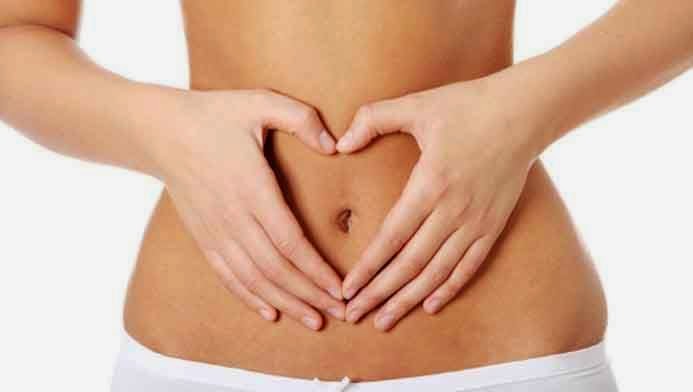
आधुनिक जीवन-शैली इस प्रकार की है कि भाग-दौड़ के साथ तनाव-दबाव भरे प्रतिस्पर्धापूर्ण वातावरण में काम करते रहने से व्यक्ति का नाभि- चक्र निरंतर क्षुब्ध बना रहता है। इससे नाभि अव्यवस्थित हो जाती है।इसके अलावा खेलने के दौरान उछलने-कूदने, असावधानी से दाएँ-बाएँ झुकने, दोनों हाथों से या एक हाथ से अचानक भारी बोझ उठाने, तेजी से सीढ़ियाँ चढ़ने-उतरने, सड़क पर चलते हुए गड्ढे, में अचानक पैर चले जाने या अन्य कारणों से किसी एक पैर पर भार पड़ने या झटका लगने से नाभि इधर-उधर हो जाती है।कुछ लोगों की नाभि अनेक कारणों से बचपन में ही विकारग्रस्त हो जाती है।

योग में नाड़ियों की संख्या बहत्तर हजार से ज्यादा बताई गई है और इसका मूल उदगम स्त्रोत नाभिस्थान है।

कई बार नाभि के टल जाने पर भी कब्ज की शिकायत हो जाती है। जब तक नाभि टली है, तब तक कब्ज ठीक नहीं हो सकता। इसके लिए हमें सबसे पहले अपनी नाभि की जांच करवा लेनी चाहिए। अगर नाभि स्पंदन केंद से खिसक गई है, तो उसे टली नाभि कहते हैं। इसके सही जगह में आते ही कब्ज की परेशानी दूर हो जाती है।

नाभि  में लंबे समय तक अव्यवस्था चलती रहती है तो उदर विकार के अलावा व्यक्ति के दाँतों, नेत्रों व बालों के स्वास्थ्य पर भी प्रतिकूल प्रभाव पड़ने लगता है। दाँतों की स्वाभाविक चमक कम होने लगती है। यदाकदा दाँतों में पीड़ा होने लगती है। नेत्रों की सुंदरता व ज्योति क्षीण होने लगती है। बाल असमय सफेद होने लगते हैं।आलस्य, थकान, चिड़चिड़ाहट, काम में मन न लगना, दुश्चिंता, निराशा, अकारण भय जैसी नकारात्मक प्रवृत्तियों की उपस्थिति नाभि चक्र की अव्यवस्था की उपज होती है।

नाभि स्पंदन से रोग की पहचान का उल्लेख हमें हमारे आयुर्वेद व प्राकृतिक उपचार चिकित्सा पद्धतियों में मिल जाता है। परंतु इसे दुर्भाग्य ही कहना चाहिए कि हम हमारी अमूल्य धरोहर को न संभाल सके। यदि नाभि का स्पंदन ऊपर की तरफ चल रहा है याने छाती की तरफ तो अग्न्याष्य खराब होने लगता है। इससे फेफड़ों पर गलत प्रभाव होता है। मधुमेह, अस्थमा, ब्रोंकाइटिस जैसी बीमारियाँ होने लगती हैं।

क्या- क्या होता है :-
===========

यदि यह स्पंदन नीचे की तरफ चली जाए तो पतले दस्त होने लगते हैं।

बाईं ओर खिसकने से शीतलता की कमी होने लगती है, सर्दी-जुकाम, खाँसी, कफ-जनित रोग जल्दी-जल्दी होते हैं।

दाहिनी तरफ हटने पर लीवर खराब होकर मंदाग्नि हो सकती है। पित्ताधिक्य, एसिड, जलन आदि की शिकायतें होने लगती हैं। इससे सूर्य चक्र निष्प्रभावी हो जाता है। गर्मी-सर्दी का संतुलन शरीर में बिगड़ जाता है। मंदाग्नि, अपच, अफरा जैसी बीमारियाँ होने लगती हैं।

यदि नाभि पेट के ऊपर की तरफ आ जाए यानी रीढ़ के विपरीत, तो मोटापा हो जाता है। वायु विकार हो जाता है। यदि नाभि नीचे की ओर (रीढ़ की हड्डी की तरफ) चली जाए तो व्यक्ति कुछ भी खाए, वह दुबला होता चला जाएगा। #नाभि के खिसकने से मानसिक एवंआध्यात्मिक क्षमताएँ कम हो जाती हैं।

नाभि को पाताल लोक भी कहा गया है। कहते हैं मृत्यु के बाद भी प्राण नाभि में छः मिनट तक रहते है।

यदि नाभि ठीक मध्यमा स्तर के बीच में चलती है तब स्त्रियाँ गर्भधारण योग्य होती हैं। यदि यही मध्यमा स्तर से खिसककर नीचे रीढ़ की तरफ चली जाए तो ऐसी स्त्रियाँ गर्भ धारण नहीं कर सकतीं।

अकसर यदि नाभि बिलकुल नीचे रीढ़ की तरफ चली जाती है तो फैलोपियन ट्यूब नहीं खुलती और इस कारण स्त्रियाँ गर्भधारण नहीं कर सकतीं। कई वंध्या स्त्रियों पर प्रयोग कर नाभि को मध्यमा स्तर पर लाया गया। इससे वंध्या स्त्रियाँ भी गर्भधारण योग्य हो गईं। कुछ मामलों में उपचार वर्षों से चल रहा था एवं चिकित्सकों ने यह कह दिया था कि यह गर्भधारण नहीं कर सकती किन्तु नाभि-चिकित्सा के जानकारों ने इलाज किया।

नाभि चैक करने के कई तरीके होते हैं। यहां हम दो तरीके बता रहे हैं:-
=========================================

दोनों पैरों को मिलाकर सीधे खड़े हो जाएं। अब दोनों हाथों को सामने सीधा करके मिला लें। हथेलियों के बीच स्थित रेखाओं को आपस में मिलाकर देखें कि दोनों हाथों की छोटी उंगली समान है या छोटी-बड़ी दिखाई दे रही है। अगर वे समान है, तो नाभि ठीक है। यदि उंगलियां छोटी- बड़ी लगती हैं, तो इसका मतलब नाभि टली हुई है।

सुबह खाली पेट हाथ और पैरों को ढीला छोड़कर सीधे लेट जाएं। अब सीधे हाथ का अंगूठा व उसके साथ वाली दो अंगुलियों को मिलाकर पेट में नाभि स्थान पर रखें और दबाकर देखें कि नाथि स्पंदन महसूस हो रहा है या नहीं। यदि स्पंदन नाभि के ठीक बीच में है, तो नाभि ठीक है। अगर वो किनारे या ऊपर-नीचे है, तो नाभि टली है।

यह स्पंदन नाभि से थोड़ा हट कर महसूस होता है ; जिसे नाभि टलना या खिसकना कहते है .यह अनुभव है कि आमतौर पर पुरुषों की नाभि बाईं ओर तथा स्त्रियों की नाभि दाईं ओर टला करती है।

नाभि के ऊपर या किनारे हो जाने से कब्ज होता है और नीचे की तरफ खिसकने से लूज मोशन हो जाते हैं। अगर नाभि टली हो, तो उसको आप बड़ी आसानी से अपने आप ठीक कर सकते हैं।

इसे ठीक करने के कुछ उपाय:-
==================

दोनों हथेलियों को आपस में मिलाएं। हथेली के बीच की रेखा मिलने के बाद जो उंगली छोटी हो यानी कि बाएं हाथ की उंगली छोटी है तो बायीं हाथ को कोहनी से ऊपर दाएं हाथ से पकड़ लें। इसके बाद बाएं हाथ की मुट्ठि को कसकर बंद कर हाथ को झटके से कंधे की ओर लाएं। ऐसा ८-१० बार करें। इससे नाभि सेट हो जाएगी।

कमर के बल लेट जाएं और पादांगुष्ठनासास्पर्शासन कर लें। इसके लिए लेटकर बाएं पैर को घुटने से मोड़कर हाथों से पैर को पकड़ लें व पैर को खींचकर मुंह तक लाएं। सिर उठा लें व पैर का अंगूठा नाक से लगाने का प्रयास करें। जैसे छोटा बच्चा अपना पैर का अंगूठा मुंह में डालता है। कुछ देर इस आसन में रुकें फिर दूसरे पैर से भी यही करें। फिर दोनों पैरों से एक साथ यही अभ्यास कर लें। ३-३ बार करने के बाद नाभि सेट हो जाएगी।

इसके अलावा उत्तानपादासन, मत्स्यासन, धनुरासन व चक्रासन भी नाभि सेट करने में कारगर होते हैं।

कमर के बल लेटकर पेट की मालिश भी की जा सकती है। इसके लिए सरसों का तेल लेकर पेट पर लगाएं और नाभि स्पंदन जो ऊपर या साइड में सरक गया है, उस पर अंगूठे से दबाव डालते हुए नाभि केंद में लाने का प्रयास करें।

दो चम्मच पिसी सौंफ, ग़ुड में मिलाकर एक सप्ताह तक रोज खाने से नाभि का अपनी जगह से खिसकना रुक जाता है।

मरीज को सीधा (चित्त) सुलाकर उसकी नाभि के चारों ओर सूखे आँवले का आटा बनाकर उसमें अदरक का रस मिलाकर बाँध दें एवं उसे दो घण्टे चित्त ही सुलाकर रखें। दिन में दो बार यह प्रयोग करने से नाभि अपने स्थान पर आ जाती है तथा दस्त आदि उपद्रव शांत हो जाते हैं।

नाभि खिसक जाने पर व्यक्ति को मूँगदाल की खिचड़ी के सिवाय कुछ न दें। दिन में एक-दो बार अदरक का 2 से 5 मिलिलीटर रस पिलाने से लाभ होता है।

साभार : http://www.bcamindia.com

आप अपने आप अपनी नाभि भ्रंश ठीक कर सकते हैं .. सुबह शाम यह व्यायाम दोनों पैरों से बारी बारी करने से दो दिन में आराम मिल जाता है और नाभि अपने स्थान पर आ जाती है… बार बार समस्या ना हो इसलिए उपरोक्त लिखे व्यायाम नियमित करने से सम्स्या से छुटकारा मिल जाता है….

Feet on Earth and Head Sky high's photo.
12108297_1123098094367326_6343518650365419385_n
आप अपने आप अपनी नाभि भ्रंश ठीक कर सकते हैं .. सुबह शाम यह व्यायाम दोनों पैरों से बारी बारी करने से दो दिन में आराम मिल जाता है और नाभि अपने स्थान पर आ जाती है… बार बार समस्या ना हो इसलिए उपरोक्त  व्यायाम नियमित करने से सम्स्या से छुटकारा मिल जाता है….

हमारी भारतीय संस्कृति बहुत निराली है! हमारी हिंदू सभ्यता में योग आयुर्वेद और आसनों का बहुत महत्व है इनका उपयोग स्वस्थ्य रहने के साथ साथ रोगों को दूर करने मे भी किया जाता है!

नाभि भ्रंश एक एसा रोग या विकार है जिसका इलाज एलोपैथी या किसी भी और तरह की चिकित्सा पद्ध्यति मे नही मिलता और आप डोक्टर की पेनकिलर टेबलेट्स खा खा कर परेशान हो जाएँगे तब भी आप को आराम नहीं मिलेगा और शरीर का नाश होगा सो अलग !!
सोरायसिस(psoriasis)

विश्व की कुल जनसंख्या का करीब 1 प्रतिशत लोग सोरायसिस से पीङित हैं,इस लिहाज से देखा जाये तो हमारे देश की कुल जनसंख्या का लगभग 1 प्रतिशत याने 1 करोङ लोगों को सोरायसिस है.


सोरायसिस के बारे में जानना ही इसका आधा उपचार है यदि आप इस रोग के बारे में जानते हैं तो आधा उपचार तो आप स्वयं ही कर सकते ,


कि सामान्य जानकारी के लिए इसकी गहराई में जाना आवश्यक नहीं है यहां हम केवल उन चीजों के बारे में बात करते हैंजो एक सामान्य रोगी के लिए जानना आवश्यक है्.


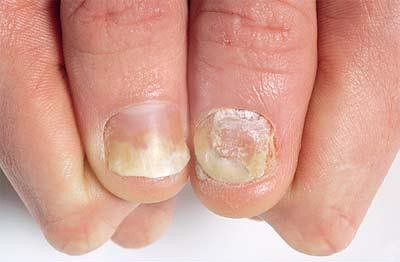
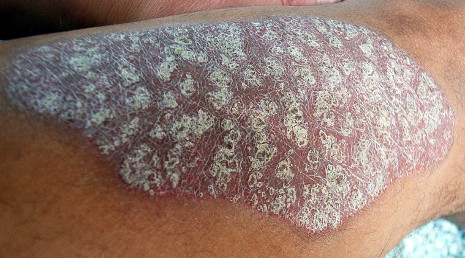
लक्षण-most characteristically lesions are chronic sharply demarcated dull red scaly plaques particularly on the extensor prominence and scalp.

2905865403_8c22f657342906702964_301d9ea35b

 अर्थात रक्तिम ,छिलकेदार ,निशान जो के आस पास की त्वचा पर अलग से दिखाइ देते हैं,ये सिर अलावाextensor surface जैसे कोहनी ,और घुटने की तरफ पूरे पाव में और कमर पर अधिकतर मिलते हैं.इनका आकार 2-4 मिमि से लेकर कुछ सेमी तक हो सकता है ,सिर में ये रूसी के गंभीरतम रूप की तरह दिखाइ देते हैं,


सोरायसिस यदि एक बार हो गया तो बह फिर जीवन भर चल सकता है .विज्ञान के इतने विस्तार के बाद भी अभी तक कोइ दवाई ऐसी नहीं बनी जो इसे पूर्णतया ठीक कर सके.पूर्णतया लगभग 10-30 प्रतिशत रोगी कुछ समय बाद अपने आप ठीक हो जाते हैं.पर इसमें उपचार की भूमिका नगण्य है ,अर्थात अपने आप ठीक होते हैं क्यों ठीक होते है ,अभी तक कारण अज्ञात है.


गंभीरता के अनुसार यह शरीर पर कई बार सिर्फ कुछेक चकतों के रूप में दिखाई देता है वे भी कुछ समय रहकर अपने आप ठीक हो जाते है ,पर बहुत बार यह शरीर के काफी बङे हिस्से को ढांप लेता है, सोरायसिस की गंभीरता मौसमी परिवर्तनों सेभी प्रभावित होती है ,जैसे सर्दियों मै सोरायसिस बढ जाता है


प्रकारक्रोनिक प्लाक सोरायसिस-यह सोरायसिस का मुख्य प्रकार है और उपर लिखित लक्षण क्रोनिक प्लाक सोरायसिस के ही हैं,


इसके अलावा इसके अन्य कई प्रकार हैं जो कि कम ही मरीजों मैं पाये जाते हैं जैसे --


guttate psoriasis-4-5 मिमि के गोल निशान बनते है ,अक्सर बच्चों मैं गले के संक्रमण के बाद होते हैं और पूरे शरीर पर गोल गोल निशान बनते है जो कि अधिकतर ठीक हो जाते हैं पर कई बार ये क्रोनिक प्लाक सोरायसिस मैं परिवर्तित हो सकते हैं


,erythrodermic psorisis-जब सोरायसिस शरीर के 80 प्रतिशत हिस्से तक फैल जाता है तो इसे कहते हैं,यह एक प्रकार का गंभीरतम प्रकार है जिसका तुरंत किसी विशेषज्ञ से उपचार की आवश्यता होती है अन्यथा जीवन के लिए खतरा हो सकता है.


pustular psoriasis-यह भी गंभीर प्रकार का सोरायसिस है जिसमें पूरे शरीर पर छाले बन जाते हैं जिनमें pus भरी होती है.


कई बार यह मात्र हथेली और पगतली पर ही होता है (palmo plantar psoriasis) और जब यह सिर्फ सर मैं होता है (scalp psoriasis ).


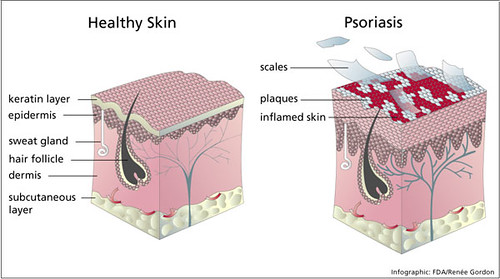
कैसे होता है सोरायसिस-हमारी त्वचा जिस प्रकार से हमारे बाल बढते है ,जिस तरह नाखून बढते हैं वैसे ही निरंतर बनती रहती है और उतरती रहती है। और हमारे शरीर की संपूर्ण त्वचा एक महिने में पूरी बदल जाती है.पर जहां सोरायसिस होता है वहां यह त्वचा केवल चार दिन में बदल जाती है.क्यों कि यह त्वचा पूरी तरह सेmature नहीं हो पाती है इसलिए इसकी पकङ कमजार होती है ओर यह भुरभुरी सी त्वचा चांदी के छिलकों जैसी दिखती है और यदि ऊपर से इसे ग्लाम स्लाइड से रगङा जाये तो धीरे धीरे परत दर परत उतरती चली जाती है और फिर हल्की हल्की रक्त की वूंदे दिखाइ देने लगती है यह एक तरह का टैस्ट है जिसे auspitz sign कहते हैं जो बङा साधारण सा तरीका है जिससे सोरायसिस का निदान किया जा सकता है ,

2906711824_497fac9a0d

उपचार-साधारणतया सोरायसिस सामान्य मॉश्चराइजर्स या इमॉलिएंट्स जैसे वैसलीन ,ग्लिसरीन.या अन्य क्रीम्स से भी नियंत्रत हो सकता है , सिर पर जब ये होता है तो विशेष प्रकार के टार शैंपू काम मैं लिया जाता हैं,सिर के लिए सैलिसाइलिक एसिड लोशन और शरीर पर हो तो सैलिसाइलिक एसिड क्रीम विशेष उपयोगी होती है.इसके अलावा कोलटार(क्रीम,लोशन,शैम्पू) diatharnol(chryosorabin bark extract ) आदि दवाइयां विशेष उपयोगी होती हैं


फोटोथैरेपी-जिसमें सूर्य की किरणों मैं पायी जाने वाली UV- ओऔर UV- किरणों से उपचार किया जाता हैं


इसके अलावा जब बीमारी ज्यादा गंभीर हो तब मीथोट्रीक्सैट और साईक्लोस्पोरिन नामक दवाईयां भी काम ली जाती हैं पर ये सब किसी विशेषज्ञ चिकित्सक की देखरेख मैं ही लेनी चाहिये,


उपसंहार-कुल मिलाकर सोराईसिस एक ऐसी बीमारी है जो एक बार यदि हो गई तो जीवन भर चलने वाली है यानि once a psoriasis patient is always a psoriasis patient. पर इतना होने के बाद भी इसकी कुछ खूबियां है भी हैं-


यह छूत की बीमारी नहीं है

विश्व में बढ़ता योग का दबदबा


इंडिपेंडेंस डे


आजादी के 62 वर्षों में भारतीय दर्शन के छह अंगों में से एक 'योग' की शिक्षा-दीक्षा आश्रम-जंगलों से निकल कर अब क्लास रूम और रिसॉर्टों में पहुँच गई है। भारत की आजादी के बाद के स्वरूप और प्रचार-प्रसार में बहुत हद तक बदलाव हो चुका है। पहले योग ऋषि-मुनियों या दार्शनिकों तक ही सीमित था किंतु जैसे-जैसे आधुनिक जीवनशैली में उपजे तनाव और घातक रोगों ने लोगों को जकड़ना शुरू किया योग के महत्व का वैश्विक वर्चस्व और विस्तार कायम होता गया।

योग को पहले चमत्कारी और ढोंगी योगियों की विद्या माना जाता था लेकिन इन 62 वर्षों में 'योग' ने पूरे विश्व में अपने महत्व की पताका फहराकर जहाँ अनेक अन्य तरह के व्यायामों को जन्म दिया वहीं लाखों लोगों को मानसिक और शारीरिक रूप से स्वस्थ भी किया।

योग विशुद्ध रूप से शरीर और मन का विज्ञान है। योग के दर्शन को हिंदू ही नहीं दुनिया के प्रत्येक धर्म ने अपनाया है। चाहे वे पाँच वक्त की नमाज, रोजा रखना हो या चर्च में समूह में प्रार्थना करने का उपक्रम हो। जैन धर्म के सत्य और अहिंसा के सिद्धांत या उपवास की कठिन प्रक्रिया हो या फिर बौद्ध धर्म के चार आर्य सत्य हो या आष्टांगिक मार्ग का दर्शन।

मील के पत्थर : आजादी के आंदोलन के समय स्वामी विवेकानंद, महर्षि अरविंद, महर्षि दयानंद सरस्वती, अभयचरण (प्रभुपाद-इस्कॉन)) और थियोसॉफिकल सोसाइटी के सदस्यों ने पश्चिमी देशों में योग के प्रचार-प्रसार में महत्वपूर्ण भूमिका निभाई। इसी के चलते आगे महर्षि महेश योगी, जिद्दू कृष्णामूर्ति और ओशो रजनीश ने योग विद्या को एक नया आयाम दिया।

बहुत पहले दूरदर्शन पर रोज सुबह योगा क्लास लगती थी जिसमें गुरु सरदारीलाल सहगल और उनके दो शिष्य एक महिला और एक पुरुष मिलकर योगासन सिखाते थे। उक्त कार्यक्रम के खत्म होने के बाद में योग शिक्षक धीरेन्द्र ब्रह्मचारी और डॉली का कार्यक्रम दूरदर्शन पर आना शुरू हुआ जिसमें दर्शकों की समस्याओं का भी समाधान किया जाता था। बाद में 90 के दशक में अन्य टीवी चैनलों की बाढ़ आने के बाद तो योग को भारत में व्यापक प्रचार-प्रसार मिला।

इनके बाद दीपक चौपड़ा, योग गुरु भास्कर नरेंदन और फिर श्रीश्री रविशंकर तथा बाबा रामदेव तक आते-आते योग विद्या विश्व के प्रत्येक भाग में प्रचलित हो गई। आजकल बॉलीवुड अभिनेत्री शिल्पा शेट्टी ने भी योग गुरु बनकर अपने योगासन की डीवीडी को बाजार में उतार दिया है।


ND

योग का बदलता स्वरूप : भारत ही नहीं भारत के बाहर भी योग दर्शन और आसनों को तोड़मरोड़कर नए तरीके से प्रस्तुत किए जाने का प्रचलन चल पड़ा है। हो सकता है‍ कि कुछ लोग इसका पक्ष लें और कुछ नहीं। अब तो हर कोई योगाचार्य बनने लगा है। आओ जानते हैं कि योग अब किस-किस रूप में विकसित हो रहा है।

बेलिबास योगा: बेलिबास अर्थात नग्न होकर योगा करने का प्रचलन अमेरिका में है जिसके विषय में तर्क दिया जाता है कि कपड़े पहनकर योग करने की अपेक्षा इससे ज्यादा लाभ मिलता है।

ईसाई योगा : ब्रिटेन में योग के साथ जीसस को जोड़कर 'ईसाई योगा' का आविष्कार किया है। कैसे? ''इन द नेम ऑफ द फादर, एंड ऑफ द सन''- वे कहते हैं कि हम सूर्य नमस्‍कार करते तो हैं, लेकिन हमारे लिए सन (सूर्य) नहीं, सन (बेटा) अर्थात जीसस क्राइस्‍ट है।

उधर अमेरिका के मिनेसाटा के मैटोमेडि इलाके में स्थित सेंट एंड्रूयू लूथटन चर्च में सिंडी सेनारिगी की 'क्रिश्चियन योगा' की क्लास में 'योगा डिवोशन' में श्वास क्रिया 'उज्जायी' सिखाई जाती थी और जिसे वह कहती थी कि ये उज्जयी नहीं 'याहवेह' है। बाद में विवाद के चलते इस क्लास को बंद भी कर दिया गया था।

फेशियल योगा : देश-विदेश में प्रचलित फेशियल योगा चेहरे की माँसपेशियों को पुन: जवान बनाने के लिए है। इसके भी कई विशेषज्ञ हो गए हैं। फेस योगा पोस्चर के द्वारा यह संभव है।

एरोबिक्स : 'अंग संचालन' को मोडिफाई कर उसे 'एरोबिक्स' कहा जाने लगा है। आजकल भारत में डांस विथ अंग संचालन अर्थात 'एरोबिक्स' का प्रचलन बढ़ गया है। प्रत्येक शहर में इसकी क्लासेस खुल गई हैं।

पॉवर योगा : हठयोग की कुछ कठिन साधनाएँ हटाकर हठयोग को नया लुक दिया गया है जिसे 'पॉवर योगा' कहा जाने लगा है। पॉवर योगा तेजी से स्लीम होने का कारकर तरीका है। जीरो ‍फिगर के जुनून के चलते इस योगा का प्रचलन भी बढ़ा है।

योग पर विवाद : पहले ब्रिटेन के कट्टरपंथियों द्वारा योग को हिंदुओं का विज्ञान कहकर ईसाइयों को योग से दूर रहने की हिदायत दी थी। फिर अमेरिका की सेंट एंड्रूयू लूथटन चर्च की योगा क्लास को बंद कर दिया गया। दूसरी ओर मलेशिया की शीर्ष इस्लामिक परिषद ने योग के खिलाफ फतवा जारी कर मुसलमानों को इससे दूर रहने को कहा है।

भारत में भी योग को लेकर देवबंद ने अपना बयान जारी करते हुए कहा कि नमाज में ही योग समाया हुआ है। मुसलमानों को अलग से योग करने की आवश्यकता नहीं। इसके अलावा बाबा रामदेव के बयानों और दावों के चलते भी योग विवाद और चर्चाओं में बना रहा। 

योग पर भाष्य : योग पर लिखा गया सर्वप्रथम सुव्यवस्थित ग्रंथ है-योगसूत्र। योगसूत्र को पातंजलि ने 200 ई.पूर्व लिखा था। इस ग्रंथ पर अब तक हजारों भाष्य लिए गए हैं, लेकिन कुछ खास भाष्यों में व्यास भाष्य, तत्त्ववैशारदी, योगवार्तिक, योगवार्तिक और भोजवृत्ति का नाम आता है। इसके बाद आधुनिक संतों ने जो लिखा वह बहुत ही महत्व का है। उक्त संतों में विवेकनंद, कृष्णमूर्ति, ओशो, महर्षि महेश योगी, आचार्य श्रीराम शर्मा, श्रीश्री रविशंकर और बाबा रामदेव की किताबें पढ़ी जाने लायक हैं।

योग का पेटेंट : की औषधियों के बाद पश्चिमी देशों द्वारा योग के महत्व को जैसे-जैसे समझा जाने लगा वैसे-वैसे व्यापारियों की गिद्ध नजर इस पर पड़ने लगी। सन 2007 में अमेरिका पेटेंट और व्यापार चिह्न कार्यालय (यूएसपीटीओ) ने अब तक योग से संबंधित लगभग 168 योग उपकरणों के पेटेंट करा रखे हैं।

महानियंत्रक पेटेंट डिजाइन तथा व्यापार चिह्न डाटाबेस से यह पता चलता है कि यूएसपीटीओ ने मुख्यत: योग संबंधी यंत्रों एवं उपकरणों जैसे कि योग संबंधी गद्दों, ग्रिप ब्लॉक, योग संबंधी मोजे, स्ट्रेचिंग यंत्र आदि में 168 पेटेंट को स्वीकृति प्रदान की है। इसी प्रकार योग संबंधी उपकरणों पर लगभग 3700 व्यापार चिह्न हैं, जिन्हें यूएसपीटीओ द्वारा पंजीकृत एवं लंबित व्यापार चिह्न डाटाबेस में सूचीबद्ध किया गया है। इस संबंध में वाणिज्य और उद्योग मंत्री अश्वनी कुमार ने राज्यसभा में सैयद अजीज पाशा के प्रश्न के लिखित उत्तर में विस्तृत जानकारी दी थी। 

योग का व्यापार : भारत ही नहीं विदेशों में भी योग अब एक बहुत बड़ा व्यापार बन चुका है। आध्यात्मिक गुरुओं के अलावा प्रबंधन क्षेत्र के लोग भी अब देश-विदेश में योग केंद्र स्थापित करने में लगे हैं। अब तो ज्यादातर योगाचार्य योग को बेचने में लगे हैं। इसके लिए उन्होंने योग को ग्लैमराइज लुक देकर भव्य तामझाम के साथ 'योगा क्लास' और 'योगा रिसॉर्ट' को लोगों में विज्ञापनों के द्वारा प्रचारित करना शुरू कर दिया है।

भारत में जहाँ बाबा रामदेव योग संबंधी व्यापक प्रचार, प्रसार और व्यापार में लगे हैं वहीं अमेरिका में 2005 से ही 'नेशनल एसोसिएशन ऑफ क्रिश्चन योगा टीचर्स द्वारा योग से संबंधित किताबें, ऑडियो और वीडियो का बाजार भी विकसित कर लिया है। इस तरह अमेरिका के बाद ब्रिटेन के चर्च हिंदू प्रार्थना, ध्यान और योग की क्रियाओं को ईसाइयत अनुसार ढालकर योग का व्यापारिक लाभ उठाने में लगे हुए हैं।

बाजारवाद के चलते अब तो देश-विदेश में 'योगा शॉप' भी खुल गई है, जहाँ आप पाएँगे कई रंगों में उपलब्ध मॉडर्न मेट, रंग-बिरंगी नक्काशी की हुई कालीन, म्यूजिक सिस्टम, बुक्स, लड़के और लड़कियों के अलग योगा ड्रेसेस, योगा बेग्स, जलनेति के लिए नेति पॉट, धोति कर्म के लिए धोति, विशेष आसनों के लिए तकिए, गद्दे और लकड़ी के पॉट जैसी अनेक और चीजें हैं, जो बाजार में उपलब्ध हैं।

इन साठ सालों में इक्कीसवीं सदी की शुरुआत होते-होते योग एक बहुत बड़ा कारोबार बन गया। एक अनुमान अनुसार भारत के बाहर योग संपदा का टर्नओवर 2003 में 1 अरब डॉलर और 2008 तक बढ़कर 25 अरब डॉलर सालाना हो गया है।

आज विश्वभर में शारीरिक और मानसिक स्वास्थ्य को लेकर चिंता बढ़ी है। इसी के चलते योग पश्चिमी दुनिया की जीवनशैली का अहम हिस्सा बनता जा रहा है। चिकित्सा विज्ञान के क्षेत्र में निरोग बने रहने और आयु बढ़ाने संबंधी जितने प्रयोग पिछले 6 दशक में हुए हैं उनमें योग को महत्वपूर्ण स्थान मिल गया है। एलोपैथी, होम्योपैथी के अलावा अब लोग योग और आयुर्वेद में ज्यादा विश्वास करने लगे हैं।

मल्टीविटामिन कैप्सूल से ज्यादा बेहतर है सहजन…………

सहजन :

क्या आप मल्टीविटामिन कैप्सूल्स लेते हैं? या फिर अक्सर शरीर में कमजोरी, थकान या चिड़चिड़ापन बना रहता है? सहजन की पत्तियों, जड़, तने की छाल, फल्लियों को एकत्र करके इन्हें सुखा लें और फिर इसका चूर्ण बना लें। रोज सुबह शाम एक-एक चम्मच चूर्ण पानी के साथ फांकी मार लें, ये चूर्ण किसी भी मल्टीविटामिन कैप्सूल से बेहतर होगा, मैं इस बात को पूरे दावे से कह सकता हूँ। इस दावे का दम आधुनिक विज्ञान भी देख चुका है।


सहजन के पेड़ से करें कई बीमारियों के उपचार :Benifits of drumstick tree.

    सहजन या मुनगा जड़ से लेकर फूल-पत्तियों तक सेहत का खजाना है। इसके ताजे फूल से हर्बल टॉनिक बनाया जाता है और इसकी पट्टी में कई पोषक तत्व पाए जाते हैं। भारत में खासकर दक्षिण भारत में इसका उपयोग विभिन्न व्यंजनो में खूब किया जाता है। इसका तेल भी निकाला जाता है और इसकी छाल पत्ती गोंद, जड़ आदि से आयुर्वेदिक दवाएं तैयार की जाती हैं। आयुर्वेद में 300 रोगों का सहजन से उपचार बताया गया है।

१) . सहजन के फूल उदर रोगों व कफ रोगों में इसकी फली वात व उदरशूल में पत्ती नेत्ररोग, मोच ,शियाटिका ,गठिया आदि में उपयोगी है। 

२)  सहजन की जड़ दमा, जलोधर, पथरी,प्लीहा रोग आदि के लिए उपयोगी है तथा छाल का उपयोग साईटिका  ,गठिया,,यकृत आदि रोगों के लिए श्रेयष्कर है।  

३) . सहजन के विभिन्न अंगों के रस को मधुर,वातघ्न,रुचिकारक, वेदनाशक,पाचक आदि गुणों के रूप में जाना जाता है 


४) . सहजन के छाल में शहद मिलाकर पीने से वातए व कफ रोग शांत हो जाते है, इसकी पत्ती का काढ़ा बनाकर पीने से गठिया, शियाटिका ,पक्षाघात,वायु विकार में शीघ्र लाभ पहुंचता है\ साईं टिका के तीव्र वेग में इसकी जड़ का काढ़ा तीव्र गति से चमत्कारी प्रभाव दिखता है


५)  सहजन की पत्ती की लुगदी बनाकर सरसों तेल डालकर आंच पर पकाएं तथा मोच के स्थान पर लगाने से शीघ्र ही लाभ मिलने लगता है।

६)  सहजन को अस्सी प्रकार के दर्द व बहत्तर प्रकार के वायु विकारों का शमन करने वाला बताया गया है। 

७)  सहजन की सब्जी खाने से पुराने गठिया और  जोड़ों के दर्द व्  वायु संचय , वात रोगों में लाभ होता है। 

८)  सहजन के ताज़े पत्तों का रस कान में डालने से दर्द ठीक हो जाता है। 

९) .सहजन की सब्जी खाने से गुर्दे और मूत्राशय की पथरी कटकर निकल जाती है। 

१०) . सहजन की जड़ की छाल का काढा सेंधा नमक और हिंग डालकर पीने से पित्ताशय की पथरी में लाभ होता है। 

११) . सहजन के पत्तों का रस बच्चों के पेट के कीड़े निकालता है और उलटी दस्त भी रोकता है। 

१२)  सहजन फली का रस सुबह शाम पीने से उच्च रक्तचाप में लाभ होता है। 

१३)  सहजन की पत्तियों के रस के सेवन से मोटापा धीरे धीरे कम होने लगता है। 

१४) . सहजन. की छाल के काढ़े से कुल्ला करने पर दांतों के कीड़ें नष्ट होते है और दर्द में आराम मिलता है। 

१५) . सहजन के कोमल पत्तों का साग खाने से कब्ज दूर होती है। 

१६)   सहजन. की जड़ का काढे को सेंधा नमक और हिंग के साथ पिने से मिर्गी के दौरों में लाभ होता है।

१७)  . सहजन की पत्तियों को पीसकर लगाने से घाव और सुजन ठीक होते है। 

१८)  सहजन के पत्तों को पीसकर गर्म कर सिर में लेप लगाए या इसके बीज घीसकर सूंघे तो सर दर्द दूर हो जाता है .

१९)  सहजन के गोंद को जोड़ों के दर्द और शहद को दमा आदि रोगों में लाभदायक माना जाता है।

२०)  . सहजन में विटामिन सी की मात्रा बहुत होती है। विटामिन सी शरीर के कई रोगों से लड़ता है खासतौर पर सर्दीजुखाम से। अगर सर्दी की वजह से नाक कान बंद हो चुके हैं तोए आप सहजन को पानी में उबाल कर उस पानी का भाप लेंने से जकड़न कम होगी।


२१)  . सहजन में कैल्शियम की मात्रा अधिक होती है जिससे हड्डियां मजबूत बनती है। इसके अलावा इसमें आयरन , मैग्नीशियम और सीलियम होता है।


२२)  .सहजन का जूस गर्भवती को देने की सलाह दी जाती है। इससे डिलवरी में होने वाली समस्या से राहत मिलती है और डिलवरी के बाद भी मां को तकलीफ कम होती है।

२३)   सहजन में विटामिन ए होता है जो कि पुराने समय से ही सौंदर्य के लिये प्रयोग किया आता जा रहा है। इस हरी सब्जी को अक्सर खाने से बुढापा दूर रहता है। इससे आंखों की रौशनी भी अच्छी होती है।


२४)  सहजन का सूप पीने से शरीर का रक्त साफ होता है। पिंपल जैसी समस्याएं तभी सही होंगी जब खून अंदर से साफ होगा।


२५) . सहजन के बीजों का तेल शिशुओं की मालिश के लिए प्रयोग किया जाता है। त्वचा साफ करने के लिए सहजन के बीजों का सत्व कॉस्मेटिक उद्योगों में बेहद लोकप्रिय है। सत्व के जरिए त्वचा की गहराई में छिपे विषैले तत्व बाहर निकाले जा सकते हैं।

२६) . सहजन के बीजों का पेस्ट त्वचा के रंग और टोन को साफ रखने में मदद करता है।मृत त्वचा के पुनर्जीवन के लिए इससे बेहतर कोई रसायन नहीं है। धूम्रपान के धुएँ और भारी धातुओं के विषैले प्रभावों को दूर करने में सहजन के बीजों के सत्व का प्रयोग सफल साबित हुआ है।

दिमाग तेज करने के घरेलू उपाय……….


10-Ways-to-retain-your-Mind-Sharp

कुछ आसान से घरेलू उपाय को बता रहे है जिससे आप सभी निश्चित ही अपना दिमाग तेज कर सकते है।(health-remedies-for-sharp-mind) विद्यार्थियों को तो इन उपायों को अवश्य ही करना चाहिए.

1.ब्राह्मी :– ब्राह्मी दिमागी शक्ति (mind power) बढ़ाने की बहुत ही मशहूर जड़ी-बूटी है। इसका नित्य एक चम्मच सेवन करना बहुत ही लाभदायक होता है। ब्राह्मी मे एन्टी ऑक्सीडेंट (anti-oxident) तत्व पाये जाते हैं जिससे हमारे दिमाग की शक्ति बढ़ती है दिमाग काम के ज्यादा बोझ के बाद भी थकता नहीं है।

2.बादाम :– बादाम हमारे दिमाग की कार्य क्षमता बढ़ाने में बहुत मदद करता है । 5 बादाम को रात में पानी में भिगो दें । सुबह इनके छिलके उतारकर इन्हे बारीक पीस कर इसका पेस्ट एक गिलास हलके गुनगुने दूध में 2 चम्मच शहद डाल कर अच्छी तरह से मिला कर ग्रहण करें। कोशिश करें कि इसका सेवन करने के लगभग 1 घंटे तक कुछ भी ना लें। इसके नित्य सेवन से थोड़े ही समय में आपका दिमाग कंप्यूटर की तरह काम करने लगेगा ।

10 बादाम को रात में पानी में भिगोकर सुबह उनका छिलका उतार कर इसे 10 ग्राम मक्खन और 10 मिश्री के साथ मिलाकर लगातार खाने से दिमाग बहुत तेज हो जाता है, भूलने की समस्या समाप्त हो जाती है ।

3.अखरोट :– अगर आप चाहते है कि आपकी स्मरण शक्ति बहुत ही तेज हो तो आप नित्य अखरोट का सेवन अवश्य ही करें । हमारे दिमाग की संरचना बिलकुल अखरोट की तरह ही होती है । हमें नित्य 20 ग्राम अखरोट 10 ग्राम किशमिश के साथ चाहिए। इससे दिमाग तेज होता है, हमें चीज़े लम्बे समय तक याद रहती है । लेकिन गर्मी में इसका प्रयोग कम करना चाहिए ।

4.अलसी का तेल :– अलसी का तेल हमारी स्मरण शक्ति और एकाग्रता दोनों ही बढाता है। इसके सेवन से दिमाग बहुत ही सक्रीय रहता है । अलसी एक तेल का नियमित रूप से सेवन करने से मष्तिष्क सम्बन्धी कोई भी बीमारी नहीं होती है। छात्रों और दिमागी काम करने वालो को इसे अवश्य ही लेना चाहिए ।

5.दालचीनी :– नित्य रात को सोते समय 10 ग्राम दालचीनी के पाउडर को शहद में मिलाकर चाट लें, और फिर कुछ भी नहीं लें । इससे दिमाग की कमजोरी दूर होती है, काम में मन भी लगता है ।

6.काली मिर्च :– प्रतिदिन 6 से 7 काली मिर्च में 25 से 30 ग्राम मक्खन और मिश्री मिलाकर खाने से भूलने की बीमारी दूर होती है, दिमाग तेज रहता है ।

 7.आंवले का मुरब्बा :– सुबह खाली पेट आंवले का मुरब्बा खाने से दिल और दिमाग दोनों को ही ताकत मिलती है।

8.गुलकन्द :– विधार्थियों को गुलकन्द को नित्य दिन में दो से तीन बार खाना चाहिए इससे भी स्मरण शक्ति तेज होती है, पढ़ा हुआ पाठ याद रहता है ।

9.पालक :– स्मरण शक्ति या दिमाग तेज करने के लिए पालक सर्वोतम आहार माना जाता है । पालक में विटामिन बी 9 जिसे फोलेट या फोलिक एसिड के नाम से भी जाना जाता है प्रचूर मात्रा में पाया जाता है। विटामिन बी 9 के अलावा पालक में विटामिन बी 2 और विटामिन बी 6 भी पाए जाते हैं जो हमारे दिमाग को बेहद सक्रीय बनाते है । पालक में ओमेगा 3 फैटी एसिड्स भी प्रचूर मात्रा में होते हैं जो हमारे मष्तिष्क के लिए बहुत हीं आवश्यक होता हैं । इससे हमारी स्मरण शक्ति एकाग्रता बढती है, हमारा मन काम में लगता है हमें मानसिक थकान भी नहीं होती है । पालक में विटामिन ए, के, इ, सी, तथा जरुरी खनिज जैसे जिंक, मैगनिसिअम , कैल्सियम इत्यादि भी पाए जाते हैं। इसलिए नियमित रूप से पालक का सेवन करें।

लेकिन जिन लोगों को गुर्दे की पथरी की अथवा गुर्दे की कोई और बीमारी है उन्हें पालक का सेवन नहीं करना चाहिए।

10.गेहूँ के पौधे का रस :– स्मरण शक्ति बढ़ाने के लिए गेहूँ के पौधे का रस भी बहुत ही लाभदायक है । इसको कुछ दिनों तक नित्य पीने से भूलने की बीमारी दूर होती है, स्मरण शक्ति बढ़ती है ।

11.डार्क चॉकलेट :– डार्क चॉकलेट यानि भूरे रंग के चॉकलेट से भी स्मरण शक्ति तेज होती है दिमाग की कार्यक्षमता बढ़ती हैं लेकिन इसे कम ही खाना चाहिए क्योंकि इसके ज्यादा सेवन से वजन बढ़ता है ।

12.जामुन :– दिमाग तेज करने के लिए गर्मी के दिनों में जामुन का भी अवश्य ही सेवन करना चाहिए । जामुन में आपकी स्मरण शक्ति तेज करने की पूरी क्षमता होती है।इसमें फीसेटिन पाया जाता है जिसकी वजह से हमको पिछली बाते या पढ़ी या सुनी गई बातें याद करने में बहुत मदद मिलती है।

13.घी से मालिश:–अगर किसी को लगता है कि उसकी स्मरण शक्ति कमजोर हो रही है, उसका काम में मन नहीं लगता है तो गाय के घी से सिर पर कुछ दिनों तक मालिश कराइये इससे पुन: स्फूर्ति आ जाएगी, दिमाग की कमजोरी भी दूर हो जाएगी।

Rare Home Remedies of Ayurveda


Jwara (Fever)

Fresh juice of whole plant of Bhoonimba or Tulasi leaves 10mL + pepper powder 500 ml TID

Fresh juice of Guduchi or Drona pushpi 10 ml TID

Diet : Light food with Bitterguard and Ginger


Shwasa (Dyspnoea)

 Fresh Vasa leaf / Ginger juice 5mL + Honey 5ml TID

Kantakari root powder 5 mg + Hingu 2 gms + Honey chew 3-4 times /day.


Kasa (Cough)

Paste of equal parts of pepperpowder, sugar,honey and Ghee whenever required.

Vibheetaki powder and honey wherever required.

Coriander powder and Sugar in equal quantity with rice washed water whenever required. (This is beneficial for cough in children).

Leaf juice of Krishna Tulasi or Bhringaraja with quantity of honey repeatedly will relieve cough with itching in throat and expectation.


Hikka (Hicough)

Lemon juice with honey and little salt.


Swara bheda (Hoarseness of voice)

Bala root powder with equal quantity of honey.


Throat infections (with inflammation)

Chewing a piece of Nirgundi root or Vacha


Amla pitta (Hyper acidity)

Hareetaki and Bhringaraj powder with old jaggery in equal quantities.


Atisara (Diarrhoea)

Decoction of Mango bark [20 ml ] repeatedly/hr

Decoction of Musta with honey

Decoction of Usheera and Ginger with Sugar and Salt


Raktatisara (Bloody Diarrhoea)

Kutaja bark decoction with Ginger juice (5ml).


Atisara with chardi (Diarrhoea with vomitting)

Parna Yavani leaf juice 5ml/hr


Chardi (Vomitting)

Usheera root powder with Coriander water repeatedly sip by sip


Ajeerna (Indigestion)

Ginger powder with Rock salt and hot water


Mootra Krichra (Dysurea)

Supernatent liquid of curd/10ml 0f Amlaki juice + 1-2 gm of cardamom powder twice/thrice daily before food.


Nasagata Rakta pitta (Bleeding from nose\Epistaxis)

Leaf juice of Vasa (10ml) with honey or sugar repeatedly

Use Doorva juice as nasal drops


Sheeta pitta (skin eruptions or rashes)

Amalaki powder 1 tsp. with jaggery 2-3 times/day

Ginger juice (10 ml.) with jaggery 2-3 times/day

Application of Tulasi leaf paste or Turmeric+ Doorva or Chandana powder + Gudoochi powder


Vipadika (cracks in foot)

Application of Amalaki paste


Vrana (Fresh wound)

 Washing with the decoction of Bala root or Sariva root or Kutaja bark

Bandage with Arka leaf

Application of Kumari (Aloe) leaf pulp is beneficial in burns


Dusta Vrana (Chronic nonhealing ulcer)

Application of latex of Saptaparna tree

Krimiyuktha Vrana (Infected wound)

Application of garlic paste


Kushta (skin disease)

Use of Vasa leaves/Neem leaves and bark/ Sapta Parna bark for bath (Decoction) and application (paste).

Guduchi juice (10 ml) with old ghee internally

Turmeric powder with cow's urine


Pama and Kandu (Itching)

Application of Maricha powder and Ghee paste

Latex of Arka leaves application


Pooti Karna (Otitis)

Tulasi leaf juice as ear drops (5+6 drops) twice daily.

Eye diseases like conjuctivitis

Use Neem bark decoction or Tender leaf juice of Shigru (Drum stick) and Honey as eye drops.


Stammering in children

Vacha powder with honey and given to lick along with speech training.


Youvana Pidaka (Acne)

Apply the paste of shalmalee kantaka with milk twice daily after cleaning the face.


Mukha paka (Mouth ulcers)

Chewing the jasmine leaves


Indralupta (Alopasia areata)

Application of paste of Hibiscus flower+black cow's urine

Application of Karaveera juice/ Dhattura leaf juice


Danta Shoola (Tooth ache)

Gargle with Neem bark decoction

Use tooth powder of Bakula seeds

Fill the latex of Saptaparna tree or heated Hingu/ Clove oil to dental cavity


Prameha

Guduchi juice (10ml) with honey twice daily

Haridra powder (1 tsp) and Amalaki powder (1 tsp) twice daily


Kamala (Hepatitis)

 Juice of neem leaves 10 ml twice daily

Shunti and jaggery in equal parts twice daily.

Guduchi leaf paste with butter milk twice daily


Sthaulya (obesity)

Vacha powder with honey with diet of Yava


Vata Roga (Rheumatic pains)

Nirgundi root decoction 40 ml twice daily

Paste of garlic (2 gms) and Ghee (5 ml) twice daily

Application of poultice by Tamarind leaf paste

SAMANA CHIKITHSA AND SODHANA CHIKITHSA


Shamana- Balancing Therapy

Literally the word Shamana means to suppress or balance. Incase the doshas are not deep rooted and the disease is not chronic these therapies are advised. On the other hand the elimination therapy is time taking and time is an important factor for curing ailments in this modern age. In Shamana therapies a special diet, contradictory to the qualities of the increased dosha is prescribed to the patient for suppressing or balancing the aggravated doshas.


Example: Cooling diet to decrease the Pitta dosha.

Different types of herbal powders, tablets, decoctions, jams, medicated oil or ghee are used in this type of treatment. It is a noticeable factor that in shamana therapies medicines are not always the way to cure but sometimes a very simple diet, or an activity can help to alleviate the aggravated dosha.

This type of therapy involves following types of activities to cure the ailment:
Fasting
Exercise
Sweating
Exposure to sun or air


Shodhana- Elimination Therapy


When the diseases are chronic it is difficult to treat through the balancing methods of shaman therapy as it takes a lot of time. Here comes the role of the elimination therapy that takes less time and cure the diseases in which the doshas are situated at a much deeper level. Shodhana therapies expel the aggravated doshas from the body by the use of different types of elimination therapies called the Pancha Karma.


It involves the use of the following five types of cleansing techniques:
Vamana- emetic therapy (supervised vomiting)
Virechana- laxatives
Vasti- herbal enema
Nasya- nasal administration
Rakta Mokshana - blood letting
Some preparatory treatments are first induced in order to soften the dosha and move it to either the stomach or the intestine from where the dosha is eliminated using the above-mentioned techniques. Shodhana is also used as a preventive treatment to gain positive health.


Different types of Chikitsa in Ayurveda


In literal terms chikitsa means treatment i.e. the manner in which the medicines are applied, what medicines are to be applied or consumed to establish harmony between the doshas and root out the disequilibrium between the factors responsible for the physiological functions of the body i.e. Health.


Classification of Chikitsa
Ekvidh Chikitsa (one type)
Nidanparivarjan
It refers to the factors or the causes of the disease that promote the disequilibrium between the dosha, dhatu & mala, eventually leading to samprapti (pathogenesis) of the disease.

Parivarjan
It refers to the factors that must be left as they cause disequilibrium and disharmony among the dosha, dhatu & mala. Example: dadhi i.e. curds (yogurt) excessive consumption of curds leads to vitiation of Kapha dosha causing Diabetes mellitus. Hence to quit (stop eating yogurts i.e. excessive consumption of the same).
Dvividh (two types)
Urjaskar
This refers to remedies applied for the prevention of the disease to maintain good health. On the basis of usage or purpose for which this remedy is used Urjaskar is further divided into the two following categories:
a) Rasayan
These are the remedies applied for rejuvenation and are associated with physical & physiological aspects of health also

b) Vajikaran
These are the remedies applied for increasing the sexual vigor in human beings. It is notable that Rasayan & Vajikaran serve preventive medicine and therapeutics both along with social medication.


Rogaghna
This refers tot he remedies applied to cure a particular ailment. These remedies are classified as follows:
a) Rogprashaman
This refers to the treatments that are applied to cure the disease but it is unable to prevent the recurrence of disease.

b) Apunarbhava
This refers to the treatments that are able to curb the recurrence of the disease.

c) Dravyabhoot
This refers to all the therapeutics used to treat diseases.

d) Adravyabhoot
This refers to the methods used to cure other than therapeutics.
Example: Bhaya (fear), Vismapan (to perplex the patient), Vyayam (exercise) and Upavas (fasting)
Trividh Chikitsa (three-types)
Dev vyapashray
This refers to faith healing or the methods related to belief of any individual. Generally all these methods have a religious reasoning behind them. These include uses of mantra- Jap (in the form of prayers), Aushadhi- Dharan (for e.g. to wear beads of Rudraksha), Tirthyatra (to visit religious shrines) to offer prayers to god.

Yukti vyapashray
It refers to the ideas implied to decide a concrete regimen for the management of the treatment and medication of the patient.
Example: combinations of medicines, main doses etc depending upon factors like age, severity of the disease etc.

Satvawaya
It refers to the remedies that are concerned with physiological aspects of treatment that eventually leads to physical and physiological well being.
Example: yoga
Trividh Chikitsa Upakram (Three types of therapies)
Antaparimarjan
This refers to the medicines that are consumed orally.

Bahiparimarjan
This refers to the medicines that are consumed for local application.

Shastra Pranidhan
This refers to the remedies that are in the form of surgical procedures involving the use of surgical instruments.


VAAJIKARANA AND VAAJIKARANA THERAPY


Vajikaran is the to the Science of aphrodisiacs. This word consists of two words i.e. Vaj meaning shukra or potency (sexual vigor) thus giving the whole term the meaning of the branch that deals with various aspects of sexual desire. Vajikaran doesn't contradict the abstaining from sex i.e. the brahmacharya but believes that sex is a means to procreation thus vajikaran serves the purpose of purushartha chatushtaya by helping to procreate sustainable species.


Who should have Vajikarana?

Age group (between 16 to 70 years)
Importance (with the exception of hereditary or traumatic impotence.)
Frequent indulgence in sex.
Shukra Kshay (oligo spermia)
Dhanavan (rich).
Who should avoid Vajikarana?
Before 16 years and after 70 years of age.
Duratma (evil minded people)
Traumatic and hereditary impotence
Stree (female) is the greatest of all the vajikaran Dravya as said by charakh. Before vajikaran, pancha karma therapy is essential. Vajikaran is good for health and influence mental health also and psyche (mind) is considered as the origin of momentum for sexual desire. Mana (mind) is also called as manoj in Sanskrit. Thus it can be utilized for treating disorders of the mind for e.g. depression.

Vajikaran thus deals not only with modes of increasing sexual vigor but also psychosomatic disorders.


Increasing Libido through ayurveda
Special consultations for low libido
(analysis of libido on ayurveda principles)
The alternative treatment adopted in ayurveda to increase libido, quality and quantity of semen, duration of hard erection and to treat male infertility effectively is known as VAAJIKARANA

VAAJIKARANA THERAPY LEADS TO:

Happiness.
Good strength.
Potency to produce offspring.
Increased duration  of  hard erection.
Increase Libido kit

Increases the male libido, erection time, hardness, quantity of  semen and sperm count.Controls premature ejaculation. A best remedy for male infertility.

THE THERAPY:-

Many preparations which increase libido have been illustrated in Ayurveda.

Here we have selected few libido increasing preparations from classical therapies illustrated by CHARAKA, SUSHRUTA and VAGBHATA, which can be prepared at home very easily using the ingredients that are available on kitchen shelves. The formulae to prepare ayurvedic medicines at home will be provided in order to propagate the benefits of Ayurvedic medicines.


INCREASE LIBIDO:-   In Ayurveda the treatment that is adopted to increase libido is called "VAJIKARANA". As this therapy increases the strength of a man to perform sexual act, like a horse, it is called 'Vajikarana'. ( 'Vaaji'=Horse.)


Increase erection Herbal supplement kit

Increases the hardness,duration of hard erection and  prevents premature ejaculation

Vaajikaranamanvicchet purusho nityamatmawan|
Thadaayattou hi dharmarthou preetishcha yasha yevacha ||
Putrasyaayatanam hyetad gunashchaite sutashrayaha |

This means "The person who takes virility therapy after rejuvenation therapy gets offspring. Through these offspring he gains the happiness."

Ayurveda has laid much importance on a male's potency. Charaka

Increase semen kit

Increases the quality and quantity of semen. Increases the sperm count, sperm motility  and healthy sperm count.
states the use of aphrodisiacs as mentioned in ayurvedic treatments enhances one's potency by leaps and bounds. These medicines are said to give one the strength and potency of a horse. These treatments are especially useful for aged people. They are said to increase sperm count and sperm motility, and also rectify impotence

Causes for Low Libido (According to AYURVEDA)

Having sex by compulsions with a person whom you do not like.
Anxiety and stress cause low libido.
Eating spicy, salty and hot food increase pitta and destroys SHUKRA (SEMEN) this leading to low libido
Overindulgence in sexual activities leads to SHUKRA KSHAYA (decrease in quantity of semen).
If Vajikara dravyas (herbal preparations to increase lilbido)) are not consumed by such persons regularly ,it may lead to CLIBYA (impotance).
By controlling sexual urges for longer duration leads to VEERYAAVARODHA (Obstruction of semen) and this leads to low LIBIDO.
Some acquire the impotence by birth.